What others do and say

We have been looking at schools for our youngest. It is not an easy task; even if you have been there before; and even if the child in question is just a few years old. At least, I know that I am not alone (minus the gifted part).

In the process, we considered ‘product characteristics’ such as the class sizes, the buildings, what languages they teach or what extra-curricular activities they offer. We also engaged in ‘observational learning’. For instance, we looked at their ratings, other children attending the school, or which schools their students traditionally move on to. And, of course, we used ‘word-of-mouth’ research by talking with friends who have children there or who know someone who knows someone whose children attended that school. The other day I even caught myself asking the opinion of someone who just happened to mention that he runs the chess club in one of the schools in question.

In a curious twist of fate, I came across a really interesting paper that I would like to share with you. The paper was written by 3 researchers based in the US: Yubo Chen, Qi Wang and Jinhong Xie. It was published in the April issue of the Journal of Marketing Research and is entitled ‘Online Social Interactions: A Natural Experiment on Word of Mouth Versus Observational Learning’. You can find the paper here.

The paper’s authors start by describing how we are influenced by world of mouth (WoM) and observational learning (OL), in our purchase decisions. Both WoM and OL have changed dramatically with the popularisation of the Internet – as evidenced by online discussion forums, product reviews’ websites, information about other buyers’ past purchases or blogs. Chen and colleagues set out to investigate how WoM and OL interact with each other and how they affect sales at different stages of the product’s lifetime. Taking the specific case of sale of digital cameras in Amazon.com, they concluded that:

1) Negative WoM has greater impact on sales than positive WoM, WHEREAS
2) The opposite happens with OL.
3) The effects diminish over the product life-cycle.
4) The positive impact of OL becomes stronger when the number of WoM increases (though, apparently, it is not affect by whether the messages are positive or negative).

I found these conclusions very interesting – particularly that the effects decrease over time and that quantity seems to be more influential than quality. I am not sure what is the dynamic at play here – it may have to do with perceptual filters. What do you think? In the case of the school decision that I mentioned earlier in this post, I found myself agreeing with opinions (WoM) that fit my OL assessment and discounting those that went against it.

What do these findings mean for businesses?

These are some of the practical applications of the paper’s findings:
- For mass-market products, it is important to get as many buyers as possible in the early stages. Why? Because doing so means that the product is featured in best-sellers lists and recommendations of the type ‘buyers who bought this product, also bought…’. I.e., early adoption increases (positive) OL. Positive OL will send a (positive) signal to other potential buyers and, therefore, impact positively on future sales.

- Sellers of mass-market products should also encourage their customers to post reviews, even if some posts are less than complimentary. This is because the positive impact of OL is amplified by the volume of WoM but not significantly impacted by the type of message.

- For niche products, it is wasteful to invest in OL. Instead, sellers should invest in product development and other initiatives to create very satisfied customers who go on to engage in positive WoM.

- Online infomediaries are more relevant for mass-market products than for niche ones.

P.S. – I am doing some research on electronic word of mouth. I am particularly interested on attitudes of users (i.e., people who post comments about a company, brand or product) towards organisations interacting with them following those posts.

If you know a good academic or practitioner study related to this topic, please let me know in the comments box below.

Value at the end of the line

Organisations invest considerable resources in getting customers to acquire their goods and services. They will promote their products in a variety of media, hand out samples or engage a sales team, for instance.

In addition, some organisations will map out the steps that their customers go through when using the product. That allows firms to identify opportunities to improve the customers’ experience – for instance, by eliminating ‘pain points’ – and, therefore, increase profitability.

What tends to get less attention, however, is the end of the line. That point when the customer stops using the product – either because it reached the end of its life or because the customer’s needs or preferences changed. Yet, here, too, organisations can improve the customer’s experience and create and capture value. Here are a few examples. Looking forward to reading your own examples, too, in the comments section.

Consumables
When we finish that coffee or sandwich, empty yet another bottle of shampoo or run out of tonner in the printer, there is an opportunity for the firm to sell us another one. There is also the challenge of disposing of whatever is left.

Organisations can add value by helping customers recycle leftover products or packaging. For instance, in the UK, Nespresso provides plastic bags to collect used capsules. Once it’s full, customers return the bag to Nespresso. According to the company’s website, the coffee grounds are used as natural fertilisers or heating, while the aluminium capsules are melted and reused.

That is a very different from the experience we recently had with another company. We ordered some consumable goods that were delivered in two rather large styrofoam boxes. When we called the company to ask what to do with the boxes, we were told to ‘dispose of them as you wish – it would not be economical or carbon-efficient for us to collect them’. Translation: it is your problem, dear customer!

If recycling is good, reducing waste is even better. A case in point is the Café next to my office. There, products are sold in packaging that breaks down quickly in general waste. This way, customers do not have to worry about separating whatever is left in the their trays at the end of the meal, which is quite handy if you are in a hurry.

Durables
Goods that do not wear out quickly and are consumed over a long period of time pose different challenges.

Typically, there is a long gap between successive purchases and, therefore, the consumer needs to go through the hassle of collecting information about alternatives, comparing options, etc… For instance, our electrical toaster stopped working over the weekend. The product guarantee has expired, so we cannot have it replaced and the manufacturer informed us that having it repaired would probably cost as much as buying a new toaster. And then, unexpectedly, they offered 25% off the purchase of a new one. Negative emotions (broken toaster, not replaceable, …) were very quickly turned into a positive one.

Furthermore, it may be difficult or costly to dispose of the durable good because of its size, weight or recycling requirements. Mattress companies, very helpfully, offer to take away your mattress and dispose of it for you. Anyone who tried to carry a king sized mattress down a narrow staircase and into the back of a car will know how valuable a service that is.

In other occasions, there may still be some economic value in the product. Organisations can add value to their customers by making it easier for them to re-sell the products in question. One example is Amazon, which allows customers to sell their used or unwanted books, DVDs, etc… on the website. Car dealers, too, will usually take in your used car and credit some amount towards the purchase of a new one.

In summary, there are many opportunities to improve the customer experience at every stage of the customer journey. That includes the end of the line, for both consumable and durable goods.

I would love to read your examples of companies that help you dispose, recycle, replace or re-sell products that you no longer use.

Keeping up with information online

I wrote earlier about the challenges of assessing the quality of online information (by the way, I am still keen on getting your comments about this topic). This post looks at issues of quantity and how we deal with the vast amounts of information available online.

The futurologist Alvin Toffler predicted in his book Future Shock, first published in 1970, that the rapidly increasing amounts of information being produced would eventually undermine our ability to understand a problem and make decisions. This limitation is known as ‘Information Overload’ and is illustrated in figure 1.

Figure 1. Information overload as the inverted U curve
Source: Eppler and Mengis 2003

It is not a new problem and it certainly isn’t exclusive to the Internet. The blurb in the back cover of a book I acquired in a library clearance not long ago (figure 2) reads: ‘(t)oday more than ever we are expected absorb and retain a great deal of written information quickly and attentively’. The interesting thing is that the book – ‘Read Better, Read Faster’ by Manya and Eric De Leeuw – was published in 1965… long before the days of the worldwide web!

Figure 2. Excerpt from back cover of ‘Read Better, Read Faster’

According to Eric Schmidt, nowadays we create in 2 days the equivalent of content produced by mankind since the beginning of time up until 2003. This may be a grossly incorrect figure according to this post in the blog ‘The Metric System’. Whether it is 5 Exabytes of information created every 2 days or 23 Exabytes of information recorded and replicated every 7 days, the fact is that the Internet and, in particular, the democratisation of content production saw the explosion of available content.

In the mid 1990s, a friend of mine had a paper directory of online resources. These were the days of dial-up Internet connections and this book was like a phone directory but for the worldwide web, with URLs in place of phone numbers. It was fairly big but manageable. It would be unthinkable to have a paper directory of the web, today. It would be huge and immediately outdated.

Increasingly, we feel anxious that we are missing out on some important update or insight. Coping strategies include checking our e-mail boxes all the time – including first thing in the morning, last thing before going to sleep… and even in the middle of the night. On weekends, festive days and family holidays. A third of respondents in the Digital Lifestyle Information Survey 2011 even claimed that they gave up sleep to try and keep up with the flood of information on their digital inboxes. I haven’t reached that stated of desperation, yet. But I confess that, most of the times, I do struggle to keep up with the inflow of information and feel anxious about what I don’t know that I am missing.

Do you feel anxious? How do you cope with the inflow of information on the web?

Clay Shirky said that it is not a problem of the information available, but rather how we filter it. That is, that rather than trying to read everything, we need to reduce the input that we deal with. One mechanism to control the flow of information is through automatic filters. These are algorithms that edit and deliver personalised search results to different users based on parameters such as the computer you have, the browser you use or your location. However, these filters show you what you might want to see rather than what you need to see. They have the potential to leave us ‘isolated in the web of one’, as so competently argued by Eli Pariser in this TED talk:

The diffusion of the printing press was met with ambivalent feelings in its time. There was enthusiasm about benefits such as the diffusion of learning, but there was also concern that the increased output would hurt scholarship, as described by Gutenberg scholar Elizabeth Eisenstein. Hopefully, we can learn from history and create a society that is more aware of others’ points of views, not less. That has much to do with the information available to each and every one of us.

Chinese Whispers Online

In the playground game ‘Chinese Whispers’, one player whispers a message to the next one, who then whispers what s/he has heard to the following player. The game continues until the message reaches the final player who reveals what s/he has heard. The final version of the message usually differs from the original one, a fact that tends to be greeted with giggles.

In adulthood, too, stories are told and retold. In the process, details are omitted, facts get confused and interpretations are added. Here is a simple example.

Recently, this tweet caught my eye:

I really liked the contrast made between the decline of the technology (i.e., the typewriter) and the permanence of the standard (i.e., the order of the letters on the keyboard). I decided to check the link provided.

The link led to a blog post from that same day, which included the following text:
According to India’s Business Standard, the last company to make [typewriters] — Godrej and Boyce — has finally shut down its production plant in Mumbai.

In the 50s, it used to produce 50,000 machines a year, but after the PC rose to prominence in 2000, volumes fell.

By 2009, the firm was producing 10,000 to 12,000 machines a year.

I followed the link from the blog post to the Business Standard article mentioned. The article, from April 17th, had the title ‘Typewriters about to become a page in history’. The article stated that production of typewriters had stopped in… 2009(1). Since then, it has been selling out its stock of typewriters and, at the time of the article, there were only 500 units left. The factory where the typewriters had been produced was converted into a refrigerator manufacturing unit, back in 2009. It is a different scenario from the one suggested by the blog post. Actually, I don’t know whether the Business Standard’s facts are correct, either. I did not check any further.

Playing Chinese Whispers in the school playground, everybody is aware that the message is mutating. Knowing how far the message has travelled gives a clue as to how much it may have changed. Moreover, there is an opportunity to test the quality of the information by checking the original message with the first player. Most importantly, no one is likely to act on that information. In ‘real’ life, though, these rules and weaknesses may not be clear and the consequences may be serious. Indeed, it is now so easy to copy, forward or share data that any piece of information has the potential to go viral and to be used far beyond what was originally intended.

Lankes(2) calls this content produced outside of the editorial and peer-reviewed process ‘disintermediated’ information and notes that it lacks the traditional cues regarding quality. Arazy and Kopak further note that a consequence of the unreliable authority of sources and questionable quality of information is that information consumers need to make those quality judgements themselves. In this scenario, an important question is: How can we assess the quality of the numerous blogs, updates and other sources of web-based information?

This is a big challenge for those who need to make decisions based on disintermediated information, as well as for information producers who want to signal the quality of their content.

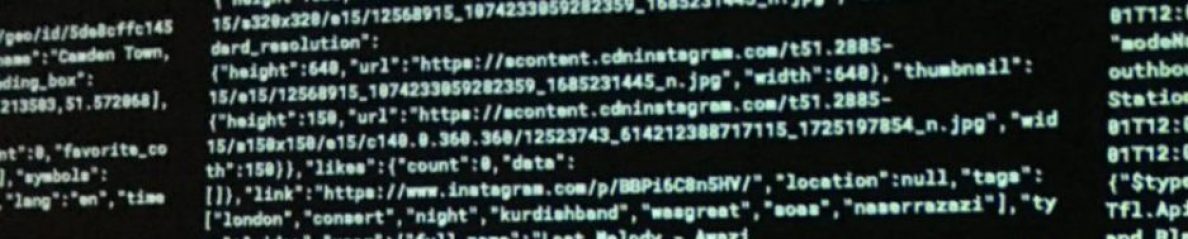
Anecdotal evidence suggests that information users consider a variety of aspects such as provision of author’s information or the number of times the article has been shared on social platforms. However, phenomena such as fake tweeting (see here) or automated re-posting (see picture) are likely to make determination of information quality ever more difficult.

What is your experience as an information consumer and/or an information producer? Please let us know in the comments below: What clues do you use to judge and/or communicate the quality of online information?

(1) It also stated that the height of production (when it manufactured 50,000 machines per year) was in the 1990s, not 1950s.
(2) Lankes, R.D. (2008). Trusting the internet: New approaches to credibility tools. In M.J. Metzger & A.J. Flanagin (Eds.), Digital media, youth, and credibility (pp. 101–122). Boston: MIT Press.