
Two examples of phenomena that we (or, at least, I) think are linked to tradition, but are, actually, manufactured and quite recent.
How Norway disrupted sushi
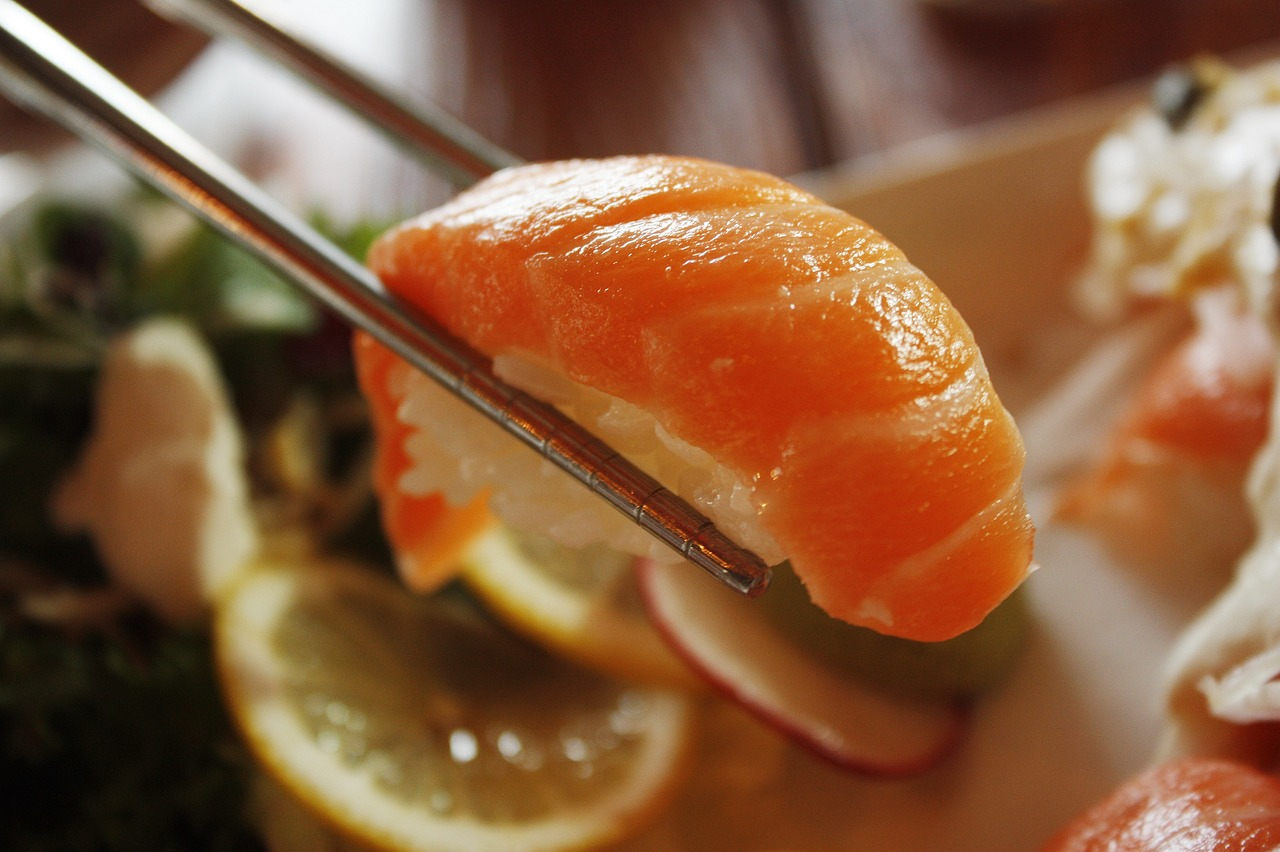
The most popular sushi topping in Japan and, probably, around the world is salmon. Yet, this is not an option grounded on tradition.
According to this article by Ida Eikvag Groth and Vibeke Hayden, “prior to 1985, serving raw salmon to a Japanese was unthinkable”, largely because Pacific salmon was small and had parasites.
It was an initiative by the Norwegian government, called “Project Japan” that brought high quality salmon to Japan: “The Norwegian salmon was large and contained more fat than the Pacific salmon, making it much tastier and more inviting in a raw state. It was also blissfully free of parasites and, therefore, very well suited for raw consumption. In addition, the efficient Norwegian fish farms were able to maintain the superior quality while scaling rapidly as demand increased.”
As the consumption of sushi spread all over the world, Norwegian’s efforts managed to established salmon as the sushi fish of choice, and Norway as the leading supplier of this “Japanese” delicacy.
How Americans disrupted pasta and pizza
Two of most popular pasta sauces are probably Bolognese and Carbonara. Yet, you will struggle to order Bolognese in a restaurant in Italy. And as for Carbonara, food historian Alberto Grandi says that it was invented at the end of World War 2, by American soldiers.
Pizza as we know it, today, is an American invention, too. Or, more exactly, an invention by Italian immigrants in the United States. As discussed in this episode of the FT Weekend podcast:
“Pizza in some form is something that has been extremely pervasive around the Mediterranean for centuries… different disks of dough that were served with various seasoning, condiments and toppings…
Pita. Pizza. There were basically all the same things. Not many outside Italy know that in Naples, pizza is commonly served wrapped. People call it in a portfolio, in a wallet, closed, wrapped up, which is basically like a pizza wrap. It used to be made not with tomato sauce, but with raw tomatoes. So it was an extremely poor sort of street food thing in the south of Italy before Italian immigrants in the United States returned and sort of popularised what in North America, especially on the East Coast, had been turned into restaurant food by previously poor migrants from the south of Italy that had made money and had decided to sort of dignify these extremely poor street foods that they used to eat back home…
My grandma hadn’t seen a mozzarella before the 1960s, before supermarket chains started opening in her village. And she saw her first pizza… in the 50s.”

What has caught your attention, recently?

 Ana Canhoto