If you are an academic (including a PhD student) curious about the potential of generative AI (GenAI) in a university context, but not sure where to start, here are some helpful resources.
About the technology
Research shows that understanding GenAIs’ strengths and weaknesses is crucial to enable a critical approach to its use. So, my first set of recommendations focuses on resources that explain how the technology works.
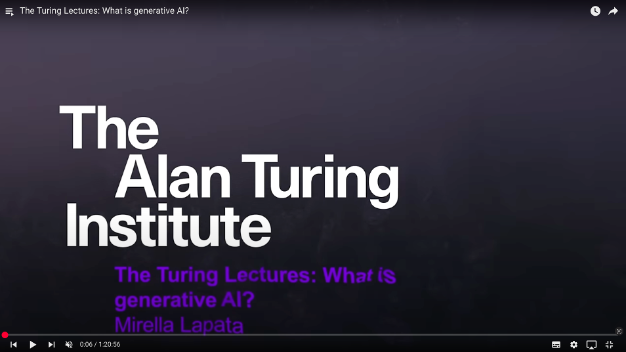
I recommend starting with this talk by Professor Mirella Lapata, for the Alan Turing Institute, suitably entitled: “What is Generative AI?”
Then, check my machine learning crib sheet, to understand the importance of fit between task and type of machine learning model.

After that, you could dive into the book “AI Snake Oil” by Arvind Narayanan & Sayash Kapoor, to explore how GenAI differs from other types of AI, what each type of AI can do, and, importantly, what AI can’t do so that you do not over-rely on it. For instance, it is important to remember that predictive AI can’t really predict who will launder money – only the risk that a specific pattern of transaction may be related to that criminal activity. If you are short of time, you can also check The Next Big Idea’s podcast episode “What Can AI Really Do?”, which is about this book.

About use of GenAi in an academic context
Technology in itself is neither good nor bad, and its value depends on the context of use. Thus, my next set of recommendations focuses on resources that consider specifically the use of GenAI in an academic context.
Ethan Mollick is a professor of Management at Wharton, with expertise in entrepreneurship and innovation. He writes regularly about developments in GenAI applications in teaching and research, and impact on innovation. He posts regularly on LinkedIn, writes on his blog, co-authored the book Co-Intelligence, developed videos… you get the idea. He is very generous with his time and knowledge and and, most importantly, makes complex ideas very simple.

Mark Carrigan is somebody else who writes regularly about GenAI in academia. His blogging is more reflective and less didactic than Ethan Mollick’s. He also has a really good book: Generative AI for Academics. Carrigan is a Senior Lecturer in Education at the University of Manchester.

Somebody else that I follow regularly is Chahna Gonsalves. As far as I am aware, she does not have a blog, but she posts regularly on LinkedIn, particularly in relation to GenAI’s impact on teaching and assessment.
And finally, you can check my introductory AI Literacy video, here.
Have you come across helpful GenAI resources, for beginners?

 Ana Canhoto