
Last week, I had an health check for the Our Future Health research programme (if you are in the UK, please consider joining this research programme, which aims to “find ways to prevent, detect and treat diseases earlier”). Looking at my blood results, the nurse suggested that I should take some steps to improve my cholesterol level. Thus, after the appointment, I promptly took to Google and ChatGPT to look for advice.

And I am not alone.
Many people turn to online resources to help with their health or disease management journeys. In fact, the UK’s National Institute for Health and Care Excellence (NICE) actually encourages health professionals to direct patients to online resources, as a means of supporting decision making, empowering patients, and saving time. However, it is also true that the unregulated nature of the Internet results in a substantial proportion of health information being misleading or inaccurate. Moreover, generative AI can produce output that is incorrect or entirely fabricated.
The trade-off between the advantages and disadvantages of using digital platforms to find health-related information is particularly relevant for people suffering from chronic illnesses, as they are likely to experience long-term contact with health services and to need to make a large number of decisions related to treatments, lifestyle and so on.
I have been working with Ruth Geraldes, Joao Vieira da Cunha and others on a project looking at the use of digital information resources by people living with Multiple Sclerosis (pwMS). We want to develop guidance to steer pwMS toward trustworthy digital resources, in order to improve the benefits and reduce the harms of using those digital resources for health-related information.
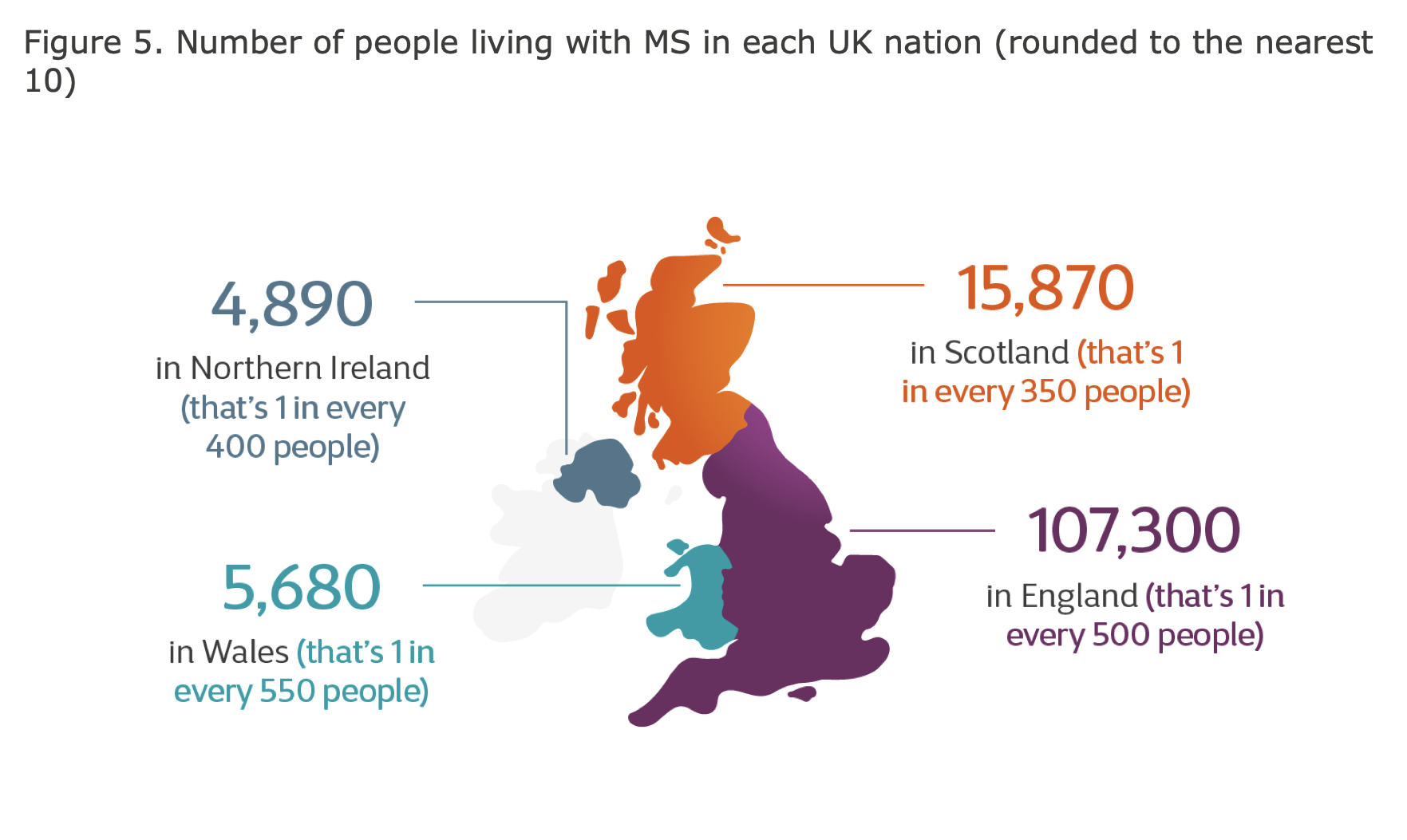
MS is the most common autoimmune disorder of the central nervous system. According to the MS Society, one in every 500 people in the UK has MS, with circa 130 new diagnoses every week. MS usually appears in adults in their late twenties or early thirties, leading to accrual of disability over time with no known cure. Thus, MS is not only a devasting illness from a personal perspective, but also has a significant expression in terms of public health.
The first output from this research collaboration is a paper that has just been published, based on a systematic review of published reports on the use of digital information resources by pwMS. The paper is entitled “Online information search by people with Multiple Sclerosis: a systematic review”, and is co-authored with David Berhanu, Miguel Leal Rato, Joao Vieira da Cunha and Ruth Geraldes. It is available, in open access, in the journal Multiple Sclerosis and Related Disorders. But here is an overview of the findings, and how they are relevant beyond the specific case of MS.
Understanding and managing the disease
Our review of studies found that up to 82% of pwMS looked for MS information online, particularly before the first appointment. Predictably, common queries included those related to a general understanding of the disease, its course or prognosis. There were also a significant number of queries related to new or innovative treatments, as well as complementary and alternative therapies, which is an area where patients may be particularly exposed to misinformation.
Concerningly, only about one third of pwMS talked with their physicians about their searches for information, online. This suggests that physicians may have to proactively ask patients about their online information search behaviours, to maximise the benefits and reduce the risks of this activity.
Enhancing quality of life
We also found that pwMS use digital resources to look for lifestyle related information such as diet, nutrition, and exercise. Many also used online resources to connect with other pwMS, support groups and MS charities.
These types of questions may not be typically covered in a medical appointment with medical staff, but is clearly important for patients, particularly those living with a chronic condition like MS. Thus, when we talk about health-related online misinformation, or consider interventions (e.g., to improve digital literacy), we need to also include aspects related to lifestyle and social circles.
Guarding the guardians
Some studies also revealed that pwMS use online sources to learn more about – or even review – MS physicians and MS centres.
This is indicative of patients who are actively involved and engaged on the management of their condition. While this reflects wider societal trends such as electronic word of mouth, and the use of product and supplier reviews, it is unclear whether health professionals dedicate time and resources to ensure that their online image communicates trustworthiness and inspires pwMS to seek their help.
Understanding and trusting online information
Around 40% of participants in one of the studies were concerned with the quality of the information available, 28% felt frustrated during information search, and 21% said that information was difficult to understand.
Problems in processing online information could be a source of stress and anxiety for pwMS. It could also push pwMS away from sources of information that tend to adopt a formal style, such as scientific publications; and towards plausible and highly convincing sources such as ChatGPT. Clinicians, charities, science communicators and other entities supporting patients should consider whether the information provided is clear and appealing, particularly in the case of diseases that impact cognitive processing, as is the case of MS.
We are now moving into the next stage of this project, where we collect data about how pwMS are using digital platforms (including generative AI) to search for information across different stages of their patient journey. We want to assess the impact on individuals, health care providers and society, of the evolving use of digital information sources, such as generative AI, by people living with chronic, disabling conditions such as MS. If you have direct or indirect lived experience of searching for information online related to a chronic medical condition such as MS, and would be happy to be interviewed or participate in a survey, please get in touch.

 Ana Canhoto
I wonder if the problem is not so much of “misleading or inaccurate” health information, but the sheer volume of respectable health related studies available online. I remember when few years back, I was first diagnosed with pre-diabetes: the medication I was prescribed was Metformin, which came with a warning to avoid alcohol completely. Unhappy with this idea, I dug around online until I found studies which proved that teetotalism was unnecessary. My favourite included a quote from an eminent doctor whose opinion was that the medical profession was dominated by “alcohol fascists”. Job done, I stopped reading and kept drinking.
I’m not alone, and have noticed how even professional scientists, when it comes to their own health or that of their families, will often cherry pick studies online which tell them what they want to hear. A couple I know managed to find more than one study online which told them how baby formula milk would be far better for their baby than breast feeding – an idea running contrary to most accepted medical thinking, but in tune with the couple’s lifestyle choices.
In my own defence, the alcohol abstinence advice for Metformin has now been replaced with alcohol-in-moderation. But the wider problem is, what sources can we trust? My go-to place is NHS.uk: the pages are based on the science, and they are not trying to sell you anything.
LikeLike