
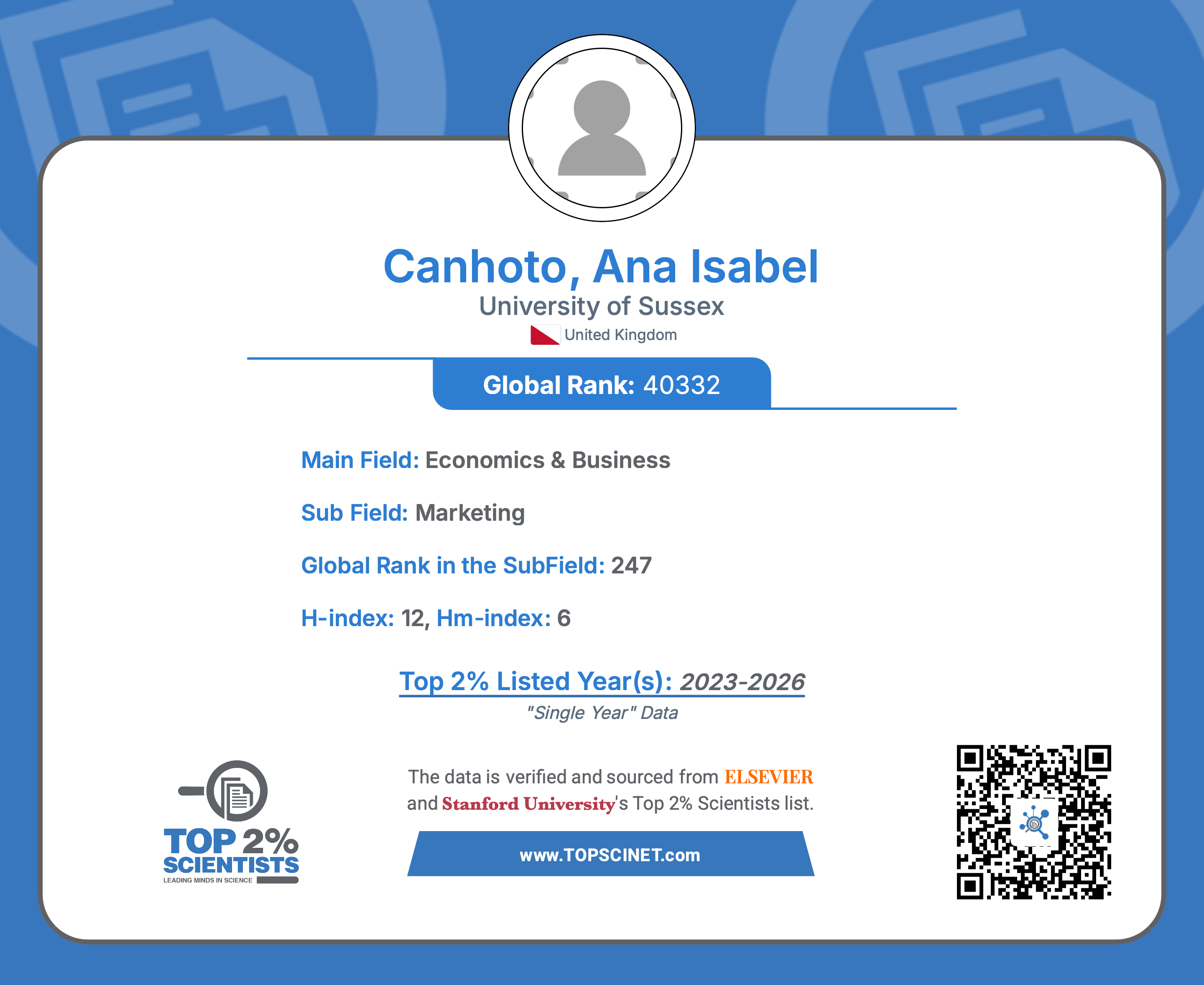
This year, I was included in the 2026 Stanford/Elsevier database of the world’s top 2% scientists, in the single-year impact list for marketing. This recognition is based on citations received during 2025.
My immediate reaction was a strange mix of pride and embarrassment. For years, I, like many academics, have looked at this and other rankings with deep scepticism. We know that rankings and metrics act as powerful decision-making shortcuts because they give consumers of that ranking an indication of status, authority, quality or whatever else the metric is supposed to measure. But, we also see these metrics as open to being gamed and reductionist. And, yet, the moment the metric validated my work, I couldn’t not be happy about it, and my brain immediately tried to rationalise it.
This friction isn’t unique to academia. We dismiss annual university league tables, “Best Places to Work” lists, industry benchmark reports, and the like… until our organisation or team leads on one of those rankings. What is happening here is an example of motivated reasoning: we do not always evaluate information objectively, but may interpret it in ways that support conclusions we would like to reach.
When we are outside of a ranking system, or underperforming, we tend to protect our self-image by questioning the metric.
We tell ourselves that the list is just a flawed popularity contest, created to serve the interests of the list’s creator (e.g., sell newspapers), and that the methodology is flawed and doesn’t capture what really matters.
Yet, when we do well according to that same metric, our brain reframes it. We don’t necessarily stop believing that the system is flawed, but our brain tells us that, in this specific instance, it managed to get it right.
This kind of external validation is particularly important in areas like academic work, where so much of our time is spent dealing with invisible progress, rejected papers, and negative feedback. Conversely, being included in a recognised ranking offers an immediate and very public indicator of achievement. So, even the most cynical academic may find it difficult to reject the recognition.
However, rankings measure relative performance, not absolute worth. Next year, I can fall in the ranking not because my work became worse, but because other people improved their performance, the methodology changed, or other factor beyond my control. When that happens, I suspect that it will be difficult to not see the ranking as faulty. And perhaps that is the key point about rankings: we can be pleased when we do well on a ranking, while remembering that it is a faulty measure, regardless of whether we do well on it or not.


